
“¡Free: the 2-minute perimenopause symptom check. See which changes are likely hormonal. Take the check →”

FREE PERIMENOPAUSE SYMPTOM CHECKER
Perimenopause Symptom Check
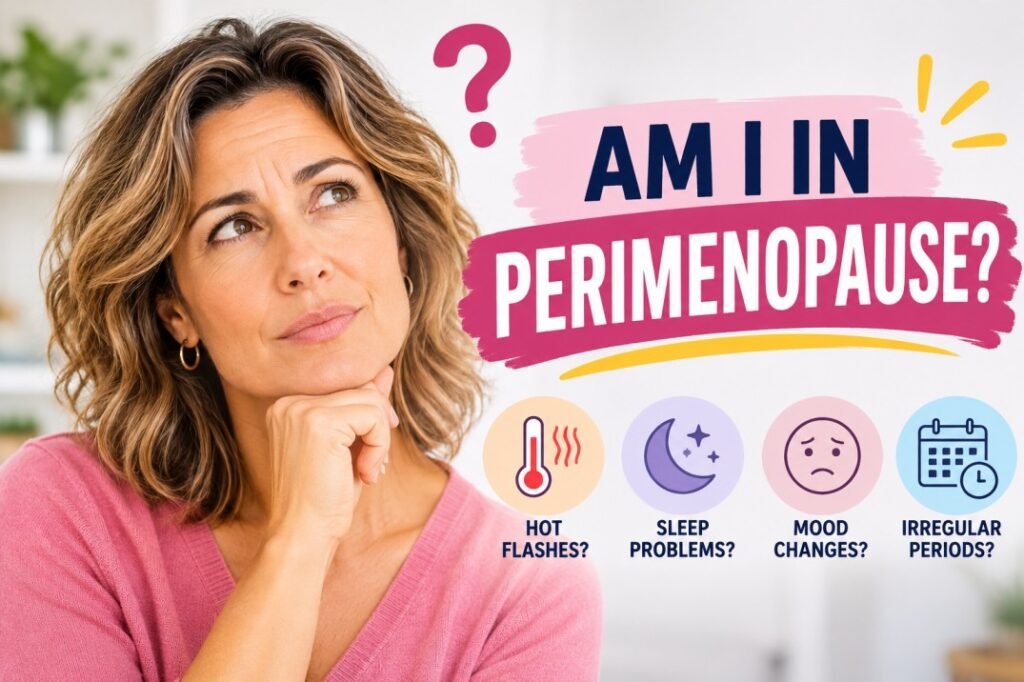
Am I in Perimenopause?
Answer 12 quick questions about your periods, sleep, mood and body. You will see which of your changes match common perimenopause patterns, and which stage of perimenopause your cycle points to.
You may be in perimenopause if you are in your 40s and your periods have started changing, for example cycles that now vary by a week or more, or skipped periods, especially alongside hot flashes, night sweats, poor sleep or mood changes. No single test confirms it, so doctors usually go by your age, symptoms and cycle pattern.
- 12 question
- About 2 minutes
- No sign-up to see your result
- 12 Your answers stay on your device
What do the results mean?
Your result is based mainly on how your periods have changed, because cycle changes are the clearest sign of the menopause transition.
| Your cycle pattern | What it usually points to | What is typical at this stage |
|---|---|---|
| Regular, but new symptoms in your late 30s or 40s | Possibly very early perimenopause | Some women notice sleep, mood or PMS changes before their cycle changes |
| Cycle length now varies by 7 days or more from one cycle to the next, and keeps doing so | Early menopausal transition | Periods closer together or further apart, heavier or lighter |
| A gap of 60 days or more between periods | Late menopausal transition | Hot flashes and night sweats become more likely. This stage lasts 1 to 3 years on average. |
| No period for 12 months in a row | Menopause has been reached, and you are now postmenopausal | Perimenopause ends 12 months after the final period |
Which perimenopause symptoms does the checker ask about?
- Hot flashes and night sweats
- Waking at night and poor sleep
- Irritability and mood swings
- Anxiety or low mood
- Brain fog and forgetfulness
- Fatigue and low energy
- Aching joints and muscles
- Weight gain around the middle
- Low sex drive or vaginal dryness
Perimenopause can cause many other changes too. See the full perimenopause symptoms checklist or perimenopause symptoms: the complete guide, and mention anything new to your doctor.
Where to go after your result
When should you see a doctor?
See a doctor before your next routine appointment if you have any of these:
- Heavy bleeding: soaking through one or more pads or tampons every hour for several hours in a row, passing clots larger than a quarter, or bleeding for more than a week
- Bleeding between periods or after sex
- Any bleeding after you have gone 12 months without a period
- Skipped or stopped periods before age 40
- Low mood that lasts more than two weeks or stops you from coping
If you are having thoughts of harming yourself, get help now. In the US or Canada, call or text 988. In the UK, call Samaritans on 116 123. In Australia, call Lifeline on 13 11 14. In an emergency, call your local emergency number.
The full list of perimenopause symptoms
Symptoms vary a lot from woman to woman. These are the ones listed by Mayo Clinic, Cleveland Clinic and the NHS.
[scrollsequence id="3801"]
Perimenopause symptom checker Frequently asked Questions (FAQ)
The clearest sign is a change in your periods after about age 40, such as cycles that vary by a week or more or periods you skip. Hot flashes, night sweats, poor sleep and mood changes often come with it. A doctor usually confirms it from your age, symptoms and cycle history.
There is no single test that confirms perimenopause. Hormone levels rise and fall from day to day, so one blood or urine result can look normal even when you are in perimenopause. Doctors usually diagnose it from your age, your symptoms and changes in your cycle.
No. The checker compares your answers with common perimenopause patterns to help you understand your symptoms and prepare for a doctor visit. It cannot diagnose perimenopause or rule out other conditions. You can print your results and take them to your appointment.
Yes, it is possible. Some women notice sleep, mood or PMS changes in their late 30s or 40s before their cycle changes at all. If you have new symptoms and regular periods, track them for a few months and mention them to your doctor.
Perimenopause most often starts in a woman's 40s, roughly four years before her final period, although some women notice changes in their late 30s. Skipped or stopped periods before age 40 should always be checked by a doctor.
No. The checker runs entirely in your browser. Your answers are not sent to MomBliss HQ or anyone else, and they disappear when you close the page. If you choose to join our email list, only your email address and the name of your top symptom are sent.
Sources
- Harlow SD, et al. Executive summary of the Stages of Reproductive Aging Workshop + 10. Menopause, 2012.
- Mayo Clinic. Heavy menstrual bleeding: symptoms and causes.
- Mayo Clinic News Network. Menopause transition: what is normal?
This checker and page are for information only and are not medical advice. They cannot diagnose perimenopause or any other condition. Speak to a qualified health professional about your symptoms. Last updated by the MomBliss HQ editorial team.